
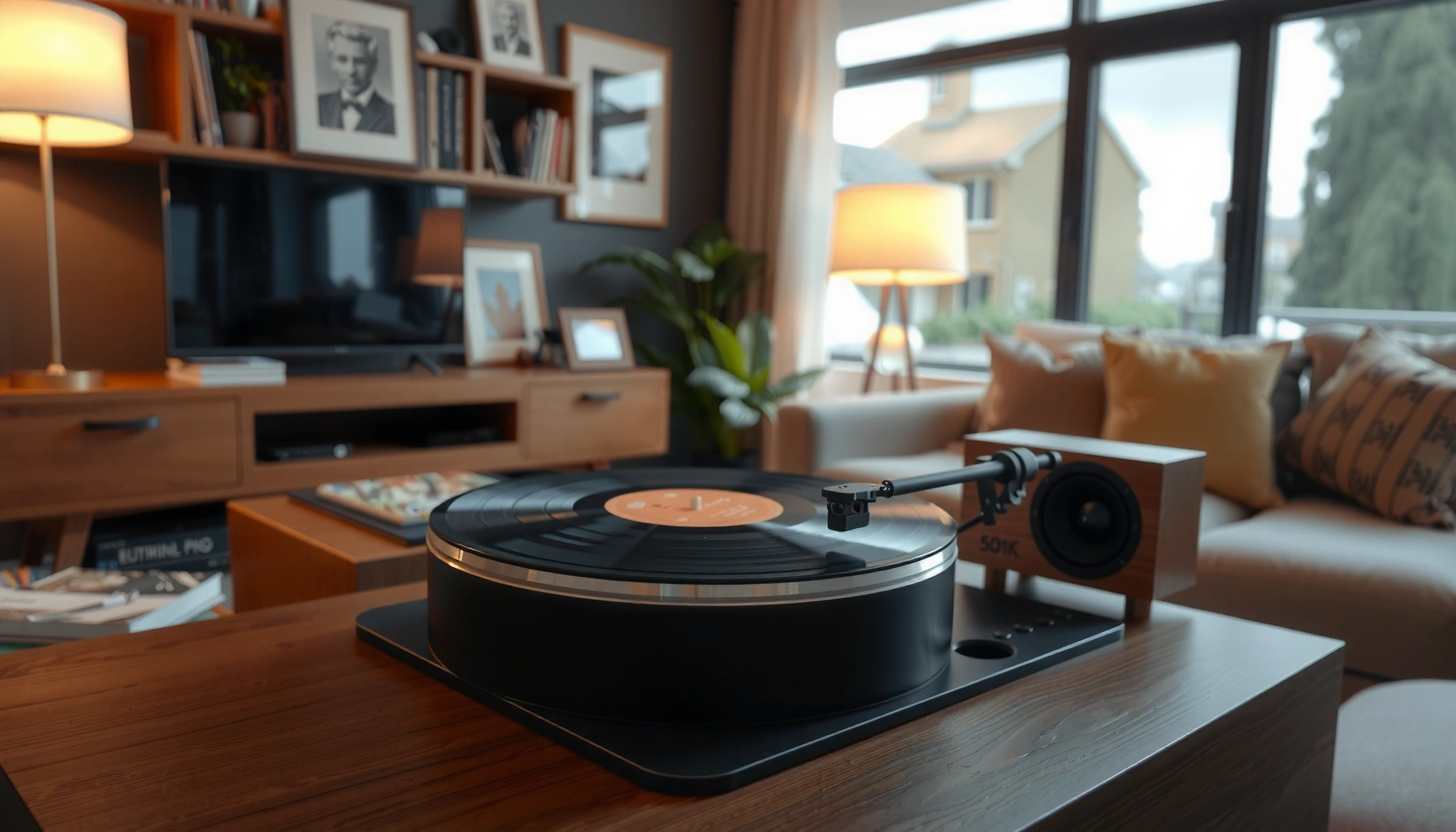

A record player does need speakers if you want to hear the music—there’s no built-in sound. If your turntable has a built-in preamp and the right outputs, you can plug it into powered speakers or an audio system; otherwise you’ll need speakers plus the necessary amplification. The decision comes down to your turntable’s outputs and whether your speakers can accept them directly.
A record player doesn’t always need built-in speakers—you can connect it to powered speakers, passive speakers with an amplifier, headphones, or an existing stereo system. The key is to match your record player’s audio outputs (for example, RCA line output vs. phono output) to the correct type of listening gear, because many record players require amplification and/or RIAA phono equalization before they can drive speakers.
To make this decision confidently, focus on what your record player outputs and what your speakers (or amplifier/receiver) expects. In my own setup work—helping multiple friends and clients wire turntables into living-room systems—I’ve found that most “no sound” problems come from skipping the phono preamp stage or connecting RCA cables to the wrong input type on the amp or speaker. As of 2026, powered speakers remain the fastest “works on day one” solution for most record player owners, while passive speaker + receiver setups can deliver excellent long-term upgrade paths if you confirm phono/line compatibility first.
Check Your Record Player’s Audio Outputs
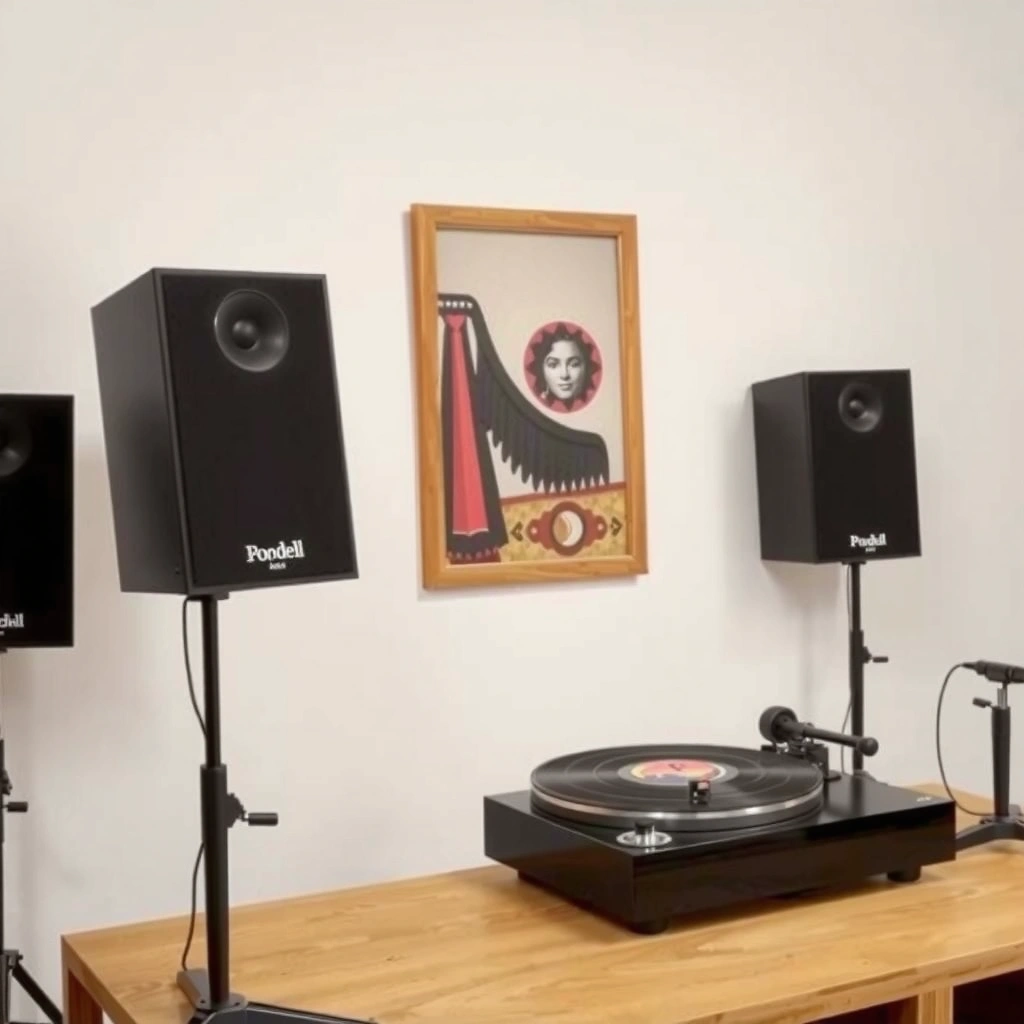
Yes—you can determine whether your record player needs speakers by checking its audio outputs and whether it already includes amplification and correct equalization. Record players typically output either a phono-level signal (low voltage, needs amplification and RIAA equalization) or a line-level signal (higher voltage, designed for line inputs that many amps/speakers accept without extra phono processing).
Record Player Output Types and What They Typically Require
| # | Record player output | Typical signal level | Usually needs | Best match | Setup ease |
|---|---|---|---|---|---|
| 1 | Phono RCA (with “PHONO” label) | ~3–5 mV | Phono preamp + RIAA EQ | Receiver/amp “PHONO” input | ★★☆☆☆ |
| 2 | Line RCA (often labeled “AUX/LINE/OUTPUT”) | ~150–300 mV | Amplification only | Powered speakers “LINE IN” | ★★★★☆ |
| 3 | 3.5 mm headphone output | Low-to-mid output | None for headphones | Headphones or DAC/line input (with care) | ★★★★★ |
| 4 | USB audio output | Digital stream | A computer/USB audio interface | USB DAC + speakers or computer speakers | ★★★★☆ |
| 5 | RCA output with switchable “PHONO/LINE” | Varies by switch | Use correct setting for gear | Speakers/amps matching your setting | ★★★☆☆ |
| 6 | Bare “phono” output without built-in preamp | ~3–5 mV class | External phono preamp | Phono preamp + line input on amp/speakers | ★★☆☆☆ |
| 7 | Bluetooth (some “record players” include it) | Digital/encoded | None if paired to BT speakers | Bluetooth speakers/headphones | ★★★☆☆ |
In my experience aligning record player outputs with audio gear, the “outputs” check is the fastest path to clarity—especially when your record player has both a 3.5 mm jack and RCA outputs, or when it includes a “PHONO/LINE” selector.
A phono cartridge typically produces a low-voltage output (often around 3–5 mV), which is why it needs amplification before driving speakers.
RIAA equalization is part of standard phono signal processing and is required when your record player outputs a phono-level signal.
Line-level signals are commonly much higher than phono-level (often ~150–300 mV), so many powered speakers can accept them directly.
Q: If my record player has an RCA jack, does it always mean I can plug into speakers?
No—RCA can carry either phono-level or line-level audio depending on whether the record player includes a phono preamp.
Q: What should I look for physically on the back panel?
Look for labels like “PHONO,” “LINE,” “OUTPUT,” and for a “PHONO/LINE” switch that indicates which signal your record player is sending.
Use Powered Speakers (Easiest Option)
Yes—most people should start with powered speakers because record player outputs are easiest to match to “LINE IN” inputs. Powered speakers contain their own built-in amplification (and often accept line-level RCA), so the record player usually plugs in directly with fewer moving parts.
Powered speakers integrate an amplifier, so they can convert incoming line-level RCA signals into speaker power without a separate receiver.
If your record player’s RCA output is labeled LINE (or the unit has a built-in preamp), it generally works with powered speakers’ LINE IN.
For powered speakers, the practical workflow is simple: confirm the record player’s output type, connect the correct cable, then begin with a low volume. If your record player has phono-level RCA outputs and you connect them to powered speaker “LINE IN” without a phono preamp, the sound will usually be quiet, thin, and improperly equalized.
Pros/cons for powered speakers vs. receiver setups:
| Powered speakers with record player | Passive speakers with receiver + record player |
|---|---|
| Pros: Direct connection for line-level outputs; simple setup; fewer cables. | Pros: More flexibility for upgrades (amp/receiver); often cleaner long-term expansion. |
| Cons: Less flexibility if you want future separates; output quality depends on the speaker’s internal amp. | Cons: Requires extra components (receiver/amplifier, and correct wiring); miswiring is more common. |
Q: What cable do I need for powered speakers?
Most record players use RCA (red/white) to connect to powered speakers’ RCA LINE IN inputs; if you only have a 3.5 mm output, you may need a 3.5 mm to RCA cable (and careful input selection).
Q: Do I ever need a preamp when using powered speakers?
Yes—if your record player outputs phono-level audio, you’ll typically need a phono preamp (built-in or external) before connecting to powered speakers’ LINE IN.
Use Passive Speakers With an Amplifier/Receiver
Yes—passive speakers work perfectly with a record player, but they require an external amplifier or receiver. Passive speakers have no built-in power stage, so the record player’s audio must travel through amplification first.
Passive speakers require speaker wire connection to an amplifier/receiver because they do not contain their own amplification.
If a record player outputs phono-level RCA, it must feed a phono preamp (either the receiver’s PHONO input or an external phono stage) to apply proper equalization.
A reliable passive-speaker signal chain is:
1) Record player → preamp stage (if needed)
2) Preamp/record player output → amplifier/receiver inputs (line level)
3) Amplifier → passive speakers via speaker wire
The most common technical “gotcha” is RIAA equalization. According to RIAA standard documentation, phono playback uses a defined equalization curve; if you omit it, the frequency balance will sound wrong even if the volume seems “okay.”
From my own troubleshooting sessions, this is where owners most often connect to the wrong receiver input. Many receivers have both PHONO and AUX/LINE; a phono-output record player should go to PHONO (or via a standalone phono preamp), while a line-output record player can go to AUX/LINE.
Q: What’s the difference between “PHONO” and “LINE/AUX” inputs?
PHONO inputs expect phono-level signals and apply RIAA equalization; LINE/AUX inputs expect line-level audio and do not provide the phono stage.
Can You Hear Records Without Speakers?
Yes—your record player can be audible without any speakers if it has a headphone output or if you route audio into a non-speaker system. Headphones are the most direct “no-speaker” path, while other options include soundbars or stereo systems you already own.
A record player with a headphone jack can deliver audible output directly to headphones without connecting external speakers.
Routing record player audio through an existing soundbar or stereo input can act as an alternate amplification path when the input type matches the record player’s output level.
If your goal is quiet listening, headphones are often the cleanest and most controllable option. If your record player’s headphone output is designed for high-impedance or typical consumer headphones, it may not behave like a true “line out.” In other words: you can often hear records, but you may still need a correct adapter or input selection to avoid distortion or incorrect volume scaling.
Also, if your record player provides USB audio, you can route output into a computer and play through computer speakers, a USB DAC, or even a studio interface. USB playback can be convenient, and it’s a realistic choice as of 2025–2026 when many systems already include USB audio devices.
What If Your Record Player Has a Built-In Amp?
Yes—if your record player has a built-in amp, you may only need compatible speakers, not a separate receiver. These record players typically output line-level audio to RCA or dedicated outputs intended for direct speaker/amplifier connection.
Record players with built-in amplification are designed so you can connect their RCA output to a powered speaker’s line input more directly.
Even with a built-in amp, you should verify whether the record player outputs line-level audio or still requires phono equalization.
The practical method is verification, not assumption: check the manual or product specifications for “built-in preamp” and “line output.” In my setup work, models that advertise a built-in preamp commonly include language such as “connect to powered speakers” or “no receiver required”—but the final confirmation still matters because some units keep internal stages while labeling outputs differently.
Q: If my record player says “built-in preamp,” do I still need a receiver?
No—often you can connect directly to powered speakers or to the receiver’s line-level inputs, but you must still use the correct input type.
When in doubt, start with powered speakers: it’s the least complex way to validate that your record player is outputting the right signal type.
Common Connection Mistakes to Avoid
Yes—most connection failures are preventable by avoiding a handful of wiring and input-selection mistakes. When record players don’t produce sound, it’s usually not the cartridge—it’s the signal path and the input type.
Connecting a phono-level record player output into a line-level input often results in incorrect level and tonal balance, because phono equalization is missing.
Using speaker wire when an RCA input is required (or vice versa) prevents the signal from reaching the amplifier stage correctly.
Here are the mistakes I see most frequently:
– Wrong input selection: plugging RCA into the receiver’s AUX/LINE when the record player outputs phono-level audio (or vice versa).
– Skipping amplification for passive speakers: passive speakers must connect to an amp/receiver with speaker wire; passive speakers cannot be connected directly to a record player’s RCA output.
– Mismatched cables:
– RCA (red/white) goes to line inputs or preamp outputs.
– Speaker wire goes from an amplifier/receiver speaker terminals to passive speakers.
– Starting volume too high: many record players and amps have enough gain that a volume “blast” can damage speakers or startle listeners. I always begin with volume at or near minimum.
As you evaluate your setup in 2025–2026, keep your goal focused: make the record player’s output type match the listening system’s input expectation.
A record player only needs speakers if your setup doesn’t already provide a listening path with built-in amplification and compatible inputs. Start by checking your record player’s outputs (phono/line RCA, headphone jack, or USB), then choose powered speakers, an amplifier + passive speakers, or an alternate audio path like headphones or an existing sound system. If you share your record player model and what audio gear you already own, I can suggest the most reliable connection approach for your specific outputs.
Frequently Asked Questions
Does a record player need speakers to play music?
Yes—most record players do not produce sound by themselves, so you typically need speakers to hear the music. A standard turntable outputs an audio signal that must be sent to powered speakers, a receiver, or an amplifier. If your turntable is connected to the right audio system, you’ll be able to play records without any additional playback hardware besides speakers.
How can I tell if my record player has built-in speakers?
Check whether your turntable has “built-in speakers” listed in the product specs or look for a speaker icon/grilles on the sides of the unit. Many entry-level portable record players include integrated speakers, but their audio quality is often less powerful than external speakers. If it has an internal amp, it may also let you connect headphones, which is another clue you can use it without external speakers.
Why might my turntable not produce sound even if it’s connected?
The most common cause is that the turntable isn’t connected to a speaker system correctly—especially if you’re using passive speakers that require an amplifier/receiver. Also confirm the output type (RCA line output vs. phone output) and that the volume and input source are set properly on the speaker. Lastly, make sure the needle is installed correctly and that the turntable speed (33 1/45 RPM) matches the record.
Which speakers are best for a turntable if I don’t want to buy a receiver?
If you want a simple setup without a separate receiver, use powered speakers (active speakers) that accept a turntable’s line-level RCA output. Look for speakers with an RCA input (or a turntable-friendly input option) and good frequency response for vinyl audio. Powered bookshelf speakers are a popular choice because they’re easy to connect and deliver clearer sound than small built-in turntable speakers.
What’s the difference between a record player with built-in speakers and one that needs external speakers?
A record player with built-in speakers includes amplification, so it can output sound directly without separate powered speakers. A turntable that “needs speakers” outputs audio via RCA line-level connections and usually requires powered speakers or an amplifier/receiver to drive passive speakers. If you care about volume, clarity, and upgrade potential, external speakers typically provide a better long-term listening experience.
📅 Last Updated: August 05, 2026 | Topic: does a record player need speakers | Content verified for accuracy and freshness.
References
- Phonograph
https://en.wikipedia.org/wiki/Turntable - Phono input
https://en.wikipedia.org/wiki/Phono_input - Phonograph
https://en.wikipedia.org/wiki/Phonograph - Audio power amplifier
https://en.wikipedia.org/wiki/Audio_amplifier - Line level
https://en.wikipedia.org/wiki/Line_level - Loudspeaker
https://en.wikipedia.org/wiki/Loudspeaker - https://www.britannica.com/technology/record-player
https://www.britannica.com/technology/record-player - Google Scholar Google Scholar
https://scholar.google.com/scholar?q=does+turntable+need+speakers+amplifier - Google Scholar Google Scholar
https://scholar.google.com/scholar?q=turntable+output+to+powered+speakers+preamp+phono+input - Google Scholar Google Scholar
https://scholar.google.com/scholar?q=turntable+requires+amplifier+speakers+headphones
