
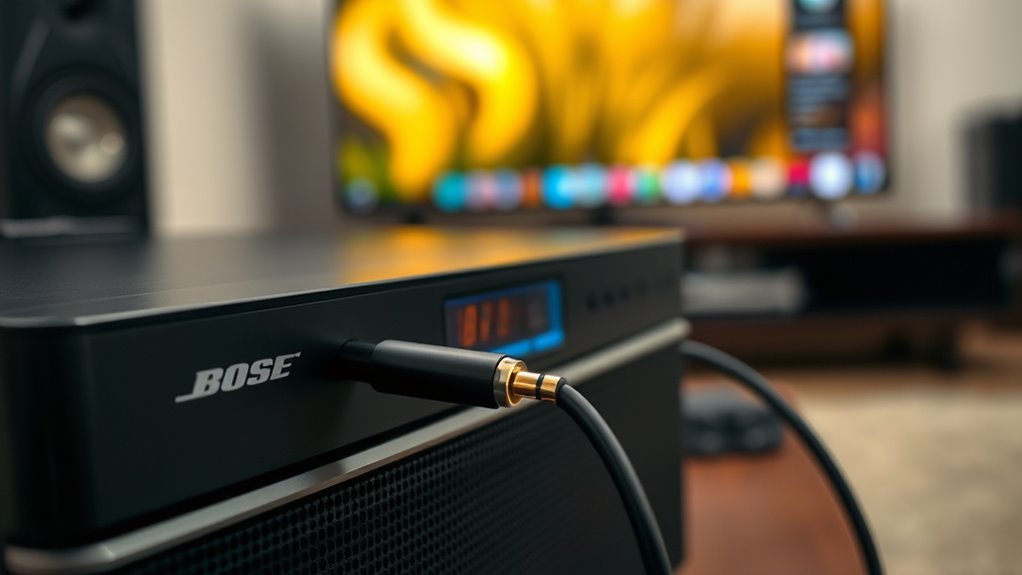

To connect your old Bose system to a smart TV, first check the available connections like HDMI, optical, or RCA on both devices. Use an optical or HDMI cable for the best audio quality. Connect the cable from your TV’s audio output to the Bose system’s input. After powering on both devices, select the correct input on the Bose. Configure your TV’s audio settings to guarantee compatibility. For more detailed steps, keep exploring the setup process.
Understanding Your Bose System and Smart TV
When you’re looking to connect your Bose system to a smart TV, it’s vital to first understand both devices’ functionalities and compatibility. Your Bose system features high-quality audio output, often including surround sound capabilities and various input options. Knowing whether your model supports Bluetooth or Wi-Fi can expand your connectivity choices. On the other hand, smart TV specifications, such as HDMI ARC, optical audio output, or Bluetooth, play a significant role in establishing a seamless connection. Check if your smart TV can support the audio formats your Bose system can decode. By understanding these aspects, you’ll guarantee an ideal audio experience, allowing you to fully enjoy your favorite movies and music without technical interruptions.
Checking Available Connections
Before connecting your Bose system to your smart TV, you need to identify the available input options on both devices. Check for HDMI, optical, or auxiliary ports, as well as assess compatibility requirements to guarantee a seamless connection. This step is essential to avoid any connectivity issues during setup.
Identify Input Options
To guarantee a seamless connection between your Bose system and smart TV, it’s essential to carefully assess the available input options on both devices. Start by checking the input types on your Bose system—common connection methods include RCA, optical, and HDMI ports. Next, examine your TV’s inputs to determine compatibility. Below is a reference table to help you identify these options:
| Input Type | Bose System Connection | Smart TV Connection |
|---|---|---|
| RCA | Yes | Yes |
| Optical | Yes | Yes |
| HDMI | Optional | Yes |
| AUX | Yes | No |
Assess Compatibility Requirements
While examining the compatibility requirements between your Bose system and smart TV, it’s important to guarantee that the selected connection method supports audio and video transmission effectively. You’ll want to check a few critical aspects to verify smooth operation:
- Connection Types: Identify if your devices have HDMI, Optical, or RCA inputs/outputs.
- Audio Formats: Confirm that your Bose system can decode the audio formats your TV outputs, such as Dolby Digital or PCM.
- Device Specifications: Review the specifications of both devices to verify they support the same resolution and refresh rates.
Choosing the Right Cables
When connecting your Bose system to a smart TV, selecting the appropriate cables is essential for ideal performance. You’ll need to take into account the types of cables available, such as HDMI, optical, and RCA, as well as their compatibility with your devices. Ensuring that both your TV and Bose system support the chosen cable type will prevent connectivity issues and enhance your audio experience.
Cable Types Overview
Selecting the right cables is essential for ensuring ideal audio performance when connecting your Bose system to a smart TV. Different cable types and audio connectors can drastically affect sound quality, so you need to choose wisely. Here’s a quick overview of common cable types you might consider:
- HDMI Cable: Transmits high-definition audio and video, ideal for modern setups.
- Optical Cable (Toslink): Offers excellent sound quality with minimal interference, perfect for digital audio.
- RCA Cables: Traditional analog audio connectors, suitable for older systems but can compromise sound quality.
Compatibility With Devices
To guarantee ideal performance between your Bose system and smart TV, it’s crucial to verify compatibility with your devices before choosing cables. Start by checking the audio output options on your smart TV; most modern TVs have HDMI ARC, optical, or RCA outputs. Confirm your Bose system supports these formats for seamless integration. If your smart TV has HDMI ARC, using an HDMI cable is the best choice, as it handles both audio and video efficiently. For systems without HDMI support, an optical digital cable can work well, provided your Bose model accepts it. Always double-check the specific Bose system compatibility with the selected cable type and verify it meets your smart TV requirements for the best audio experience.
Connecting the Bose System to the Smart TV
Although connecting your Bose system to a smart TV may seem challenging, the process is straightforward when you follow the right steps. To get started, confirm you have the necessary cables or wireless setup. Here’s how to connect your Bose system:
- Identify Connections: Check if your Bose system uses HDMI, optical, or RCA connections. For connecting wireless speakers, confirm Bluetooth is enabled on both devices.
- Connect the Cables: If using wires, connect the appropriate cable from the TV’s audio output to the Bose system’s input.
- Power On Devices: Turn on your smart TV and Bose system, then select the correct input source on your Bose to start optimizing sound quality.
With these steps, you’ll enjoy immersive audio from your favorite shows and movies.
Configuring Audio Settings on Your TV
Once your Bose system is connected to the smart TV, the next step is configuring the audio settings to secure ideal sound output. Begin by accessing your TV’s audio settings menu. Here, select the appropriate audio formats; for instance, if your Bose system supports Dolby Digital, confirm this is enabled for maximum performance. Next, you’ll want to perform sound calibration. This process adjusts the audio levels based on your room’s acoustics, securing balanced sound. Look for options that allow you to set speaker distances and levels, as this will enhance your listening experience. Finally, test different settings to find what resonates best for you, allowing you the freedom to enjoy your media the way you prefer.
Testing the Audio Output
How can you guarantee that your Bose system is delivering ideal audio quality from your smart TV? To guarantee peak sound performance, it’s essential to conduct thorough sound testing. Here’s how you can do it:
To ensure your Bose system provides exceptional audio quality from your smart TV, thorough sound testing is crucial.
- Play a Variety of Audio Sources: Use different genres and formats to assess the system’s response across frequencies.
- Adjust Volume Levels: Test the audio at low, medium, and high volumes to identify any distortion or loss in quality.
- Check Surround Sound Features: If your Bose system supports surround sound, verify it’s effectively delivering sound from all channels.
Troubleshooting Common Issues
Even with thorough sound testing, issues can occasionally arise when connecting your Bose system to your smart TV. If you’re experiencing common sound issues, start by checking the audio settings on both devices. Confirm your TV’s audio output is set to the correct format—PCM is often the safest choice. If you encounter connectivity problems, verify all cables are securely connected, and consider using a different HDMI port or cable. Additionally, reset your Bose system and TV to refresh their connections. If the problem persists, consult the user manuals for troubleshooting steps specific to your model. With these methods, you can regain that seamless audio experience you desire.
Frequently Asked Questions
Can I Use Bluetooth With My Old Bose System?
Using Bluetooth with your old Bose system is like trying to fit a square peg in a round hole; it often lacks Bluetooth compatibility. You may need an adapter to access modern wireless features.
Will Connecting to a Smart TV Affect Sound Quality?
Connecting to a smart TV shouldn’t negatively impact sound quality. In fact, you may experience sound enhancement, preserving audio fidelity. Just guarantee proper connections and settings to optimize your old Bose system’s performance.
How Do I Reset My Bose System After Connecting?
To reset your Bose system, unplug it, then press and hold the power button for 10 seconds. Reconnect, adjust your audio settings to your preference, and enjoy your newly refreshed sound experience.
Can I Connect Multiple Devices to the Bose System?
Yes, you can connect multiple devices to your Bose system, depending on its compatibility. Utilize various audio input options like RCA, optical, or Bluetooth to switch seamlessly between devices for an enhanced audio experience.
What Are the Power Requirements for My Bose System?
Your Bose system typically requires specific power specifications detailed in its manual. To guarantee compatibility, use the recommended voltage and wattage. If needed, consider using compatible adapters to meet those requirements without compromising performance.
